
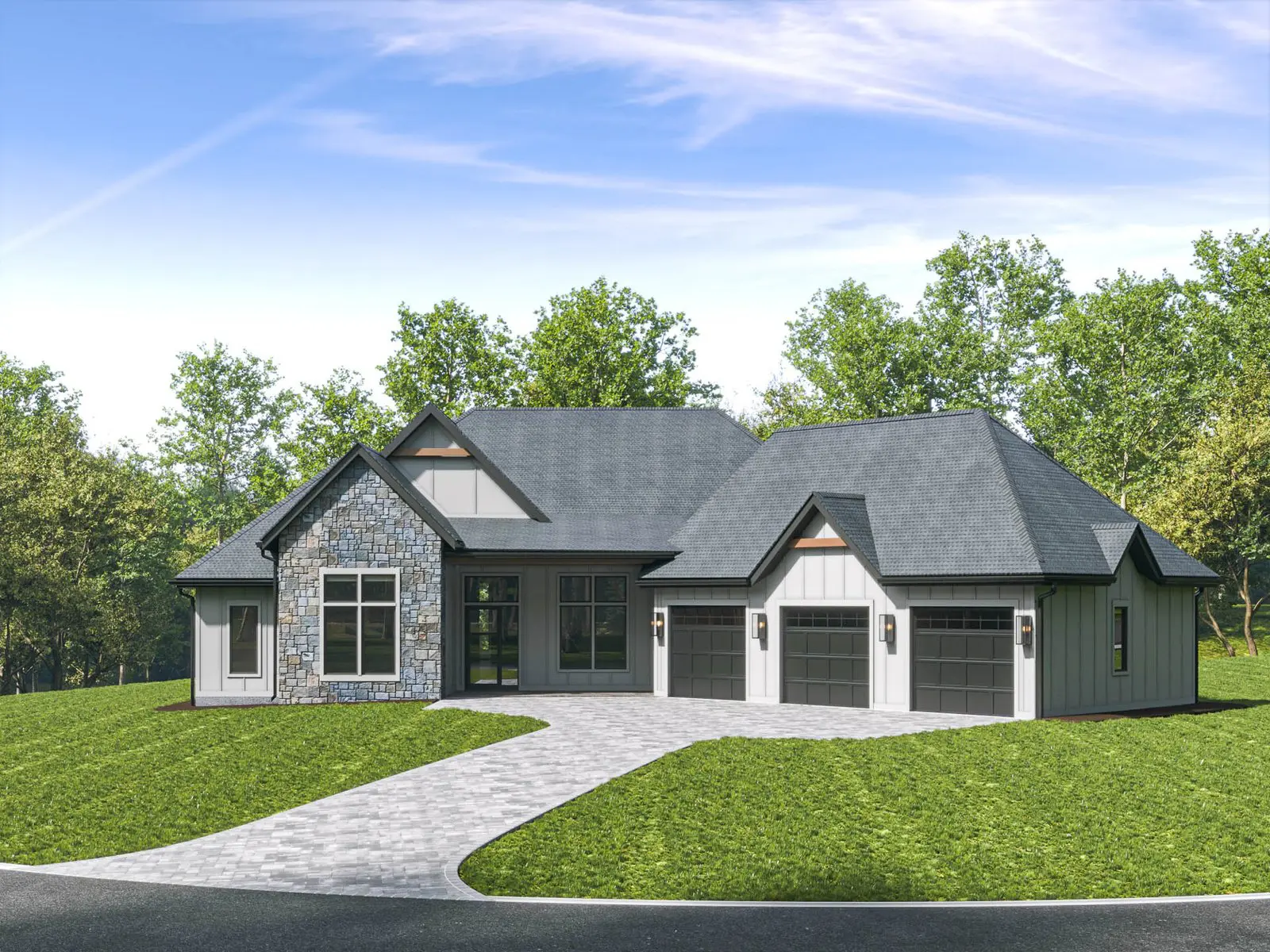
Every remodel serves two owners. The first is you, living with the new kitchen or the refreshed exterior for years to come. The second is a buyer you have not met yet, walking through with a critical eye and an appraisal on the way. The smartest 2026 remodel decisions respect both, and this year’s national data makes it much easier to separate the money you spend for enjoyment from the money you can reasonably expect back at resale.
Two reports anchor the current picture. Zonda’s 38th annual Cost vs. Value report models what common projects recover when a home sells, and the National Association of Realtors’ 2025 Remodeling Impact Report layers in what agents actually tell sellers to do before listing. Read together, they describe a clear hierarchy, and it starts outside the front door.
The Exterior Quietly Wins Again
Zonda’s latest report placed garage doors, steel entry doors, and manufactured stone veneer first, second, and third in the country, and each of the three recovered more than twice its modeled cost at resale, according to the firm’s September 2025 release. Even more telling, eight of Zonda’s national top 10 projects were exterior replacements. The full rankings appear in Zonda’s Cost vs. Value announcement.
The pattern is not an accident. Exterior replacements are the rare projects that improve a home’s first impression, its listing photos, and its inspection report at the same time. A new garage door reads as fresh from the curb and signals that the mechanical side of the house has been kept up. A steel entry door tightens the envelope while giving the facade a focal point. Manufactured stone veneer adds texture and shadow to an elevation that might otherwise be a flat plane of siding. None of these projects ask a buyer to share your taste. They simply present a house that looks cared for, which is the quality buyers pay for most reliably.
Where to start on your own house
Walk to the street and look back at your home the way a buyer would. If the garage door is the largest single surface on the front elevation, as it is on many WNC plans, it is probably the highest-leverage square footage you own. An entry door in steel, painted with intent, anchors the composition. Save the more personal exterior moves, such as bold trim colors or decorative shutters, for after the replacements are done. Condition first, expression second.
The Interior Work That Holds Its Value
Inside, the standout is modest by design. A minor kitchen remodel was the only interior project in Zonda’s national top five, and the firm modeled a 112.9% cost recovery for it. The word minor is doing the work in that sentence. This is the remodel that keeps the existing layout, refreshes cabinet fronts, counters, and appliances, and resists the temptation to move plumbing walls. Zonda’s outdoor-living figures tell a similar story of restraint, with a wood deck modeled at 94.9% recovery and a composite deck at 88.5%.
NAR’s April 2025 remodeling report, built on member surveys rather than cost modeling, lands in the same territory. Realtors estimated a full 100% cost recovery for a new steel front door, 83% for a closet renovation, and 74% for new vinyl windows. And when asked what they most often recommend sellers do before listing, the answers were strikingly humble. Painting the entire home led at 50%, painting a single room followed at 41%, and installing new roofing came in at 37%, per the NAR report.
Notice what is absent from those recommendations. No primary-suite additions, no wine rooms, no gut renovations. Agents are telling sellers to correct condition, not to redesign the house.
Condition and Consistency Beat Customization
This is the part of the data that matters most for design-minded homeowners. Buyers reward homes that feel coherent, where the finish level of the kitchen matches the baths, the flooring runs consistently from room to room, and nothing reads as half-finished or overbuilt for the street. A highly customized gut remodel can absolutely be worth doing, but it should be understood as a purchase for your own life, not an investment thesis. The market pays for a house in excellent condition that fits its neighborhood. It rarely pays a premium for one owner’s very specific vision.
Before committing to a major interior project, ask three questions. Does this bring the room up to the standard of the rest of the house, or push it far beyond? Would the result photograph well for a listing without a paragraph of explanation? And is the choice one the next owner inherits gladly, or one they will budget to undo?
Keep the Budget Honest
The other threat to your return is quieter than any design decision. In Houzz’s 2026 U.S. Houzz and Home study, 37% of renovating homeowners reported exceeding their initial budget. The overruns were often voluntary, with 35% intentionally choosing higher-end materials and 31% expanding the project’s scope along the way. That spending does not just strain the household ledger. It raises the recovery bar, because every additional dollar has to be earned back at sale for the project to hold its modeled return.
- Set the finish level in writing before demolition, room by room, and treat upgrades as separate decisions with their own price tags.
- Hold your own contingency rather than letting surprises quietly expand into scope changes.
- Interrogate each upgrade. When a higher-end material tempts you, ask whether it changes how the room lives or only how the invoice reads.
What This Means in Western North Carolina
One caution belongs on every one of these numbers. Zonda and NAR publish national and regional models, and Western North Carolina is a market of micro-markets. A composite deck overlooking a long ridgeline view carries different weight than the same deck facing a fence line, and finish expectations shift noticeably between an in-town street and a newer subdivision. Use the national benchmarks to set direction, then let your specific home, street, and buyer pool set the ceiling.
If you are weighing a remodel against a move, it helps to know what buyers in this region actually respond to. The team at Big Hills Real Estate works with new construction and resale homes across Western North Carolina every week, and can tell you where design investment pays and where it simply pleases. Explore available homes and communities at Big Hills Real Estate and start the conversation about your next address.